August 30, 2025

The Sistine Chapel (1 of 3)

The Sistine Chapel is one of three Papal Chapels which comprise the Apostolic Vatican Palace and seat of the "conclave" (from the latin "cum clave", literally "locked") - the Assembly of Cardinals called to elect a new Pope. Built over the basement of a sanctuary founded by Pope Nicholas III around 1278, the majestic chapel was erected by Pope Sixtus IV and takes it's name after him. It's vast nave has the same measurements of Solomon’s temple as described in the Old Testament (40.93 metres long, 13.41 metres wide, and 20.71 metres high). The "lowered vault" of the ceiling is divided into two sections by a marble transenna.

The construction of the Chapel was part of wider renovation work which took place during the temporary transfer of the Pope’s seat to Avignon, from 1309 to 1423. Even now, it's attribution is not 100% uncertain, but many accept Giovanni dei Dolci as the architect. Works commenced around 1473 and were completed by 1481. Side wall paintings began shortly thereafter, assigned to the most admired and influential painters of the Renaissance era, namely Sandro Botticelli, Domenico Ghirlandaio, Cosimo Rosselli, Bartolomeo della Gatta, Pietro Perugino, Pinturicchio, and possibly Luca Signorelli. The main theme of the frescoes was the life of Moses and that of Christ with Papal portraits. Tapestries by Raphael, woven in Brussels between 1515-1519, were hung around the side walls on important occasions. They are frequently loaned to museums elsewhere in the world.

To read the second part of this Vatican tours article, please click here, or there...
Extended Vatican tours of the Museums

We are now offering a new tour entitled "Extended Vatican Museums". It's our longest and most comprehensive tour of the Vatican. For the best selection of private tours in Rome visit When In Rome Tours!

Vatican Tickets and Rugby in Rome

We're in the low season. Rome in February is a curious thing, mosquitoes are making a comeback, weather is improving on the quiet and while the number of tourists in town seems to be set fair, it's actually borderline negligible. It was interesting to note at the weekend that Irish pubs across Rome were almost empty of Irishmen, and two billion of them live here. They were out in force to watch English football's greatest derby (Man U v Man C), and England Rugby's destruction of Italy in the Six Nations at Twickers on Saturday, but no sign of any of them on Sunday bar a token gathering in the Rack and a family affair in the Den. Finnegans was fun as ever, but there were almost as many Lazio fans watching their team win in Brescia as Italians supporting Ireland as they do Celtic, Sinn Fein, ad nauseam. We had the pleasure of meeting a group of rugby fans from Devon in England between two watering holes before the Ireland v France match. They seemed to be more interested in hearing about In Rome Tours and Vatican ticket prices than watch the opposition injure each other for the greater good.

January 14, 2025

Private Tours in Rome with In Rome Tours

Experience Rome Like a Local with Exclusive Private Tours curated by In Rome Tours

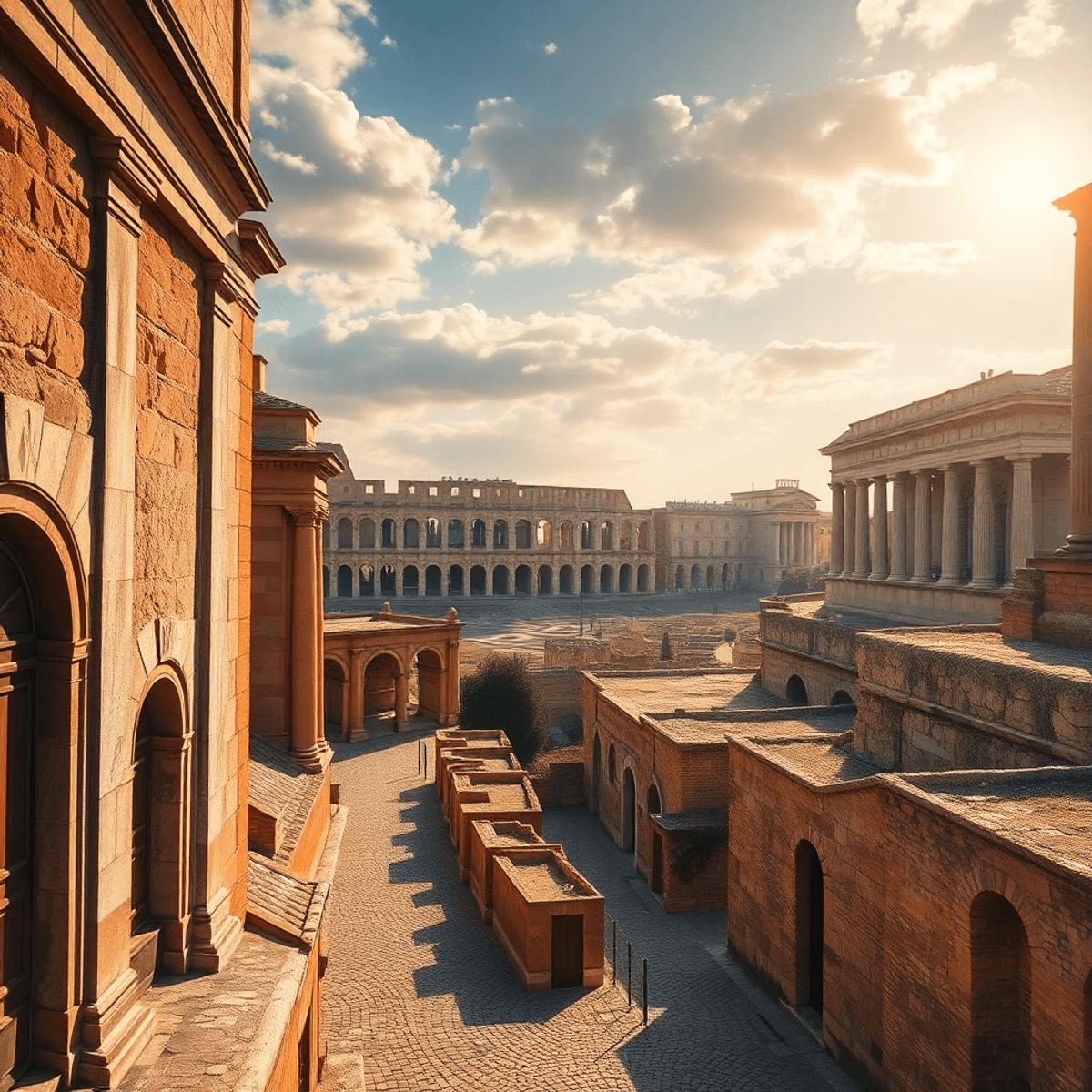
A scenic view of ancient Roman ruins, including the Colosseum, bathed in warm sunlight with cobblestone streets and historic buildings, evoking exploration and wonder.

Introduction to Private Rome Tours

 Rome is like a living museum, where ancient ruins tell stories of emperors and gladiators, and Renaissance masterpieces decorate countless churches and galleries. With its 2,500 years of history, this eternal city deserves more than just a quick visit – it calls for an in-depth exploration through private tours of Rome.  The beauty of Rome lies in its layers: under every cobblestone and behind each grand building door is a story waiting to be uncovered. Private Rome tours reveal these hidden stories, giving visitors an opportunity to go beyond the usual tourist spots and discover the true essence of the city.  In Rome Tours has perfected the art of creating exclusive private tours that bring the city's rich history to life. Led by knowledgeable art historians and archaeologists, these personalized journeys turn your trip to Rome into an immersive educational experience. Whether you're fascinated by the grandeur of the Vatican Museums or the peaceful charm of lesser-known churches, their private guides ensure every moment in Rome becomes a meaningful connection to its extraordinary past.

Why Choose Private Tours in Rome?

 In Rome Tours offers a private Rome tours that make your visit truly special. Unlike group tours, where the itinerary is fixed and you have to follow along with everyone else, private tours allow you to customize your journey based on your interests.  Whether you're an art lover wanting to explore the works of Caravaggio or an architecture enthusiast eager to delve into the ancient Roman structures, a private tour can cater to your specific passions.  Here are some reasons why private tours are a great choice:

1. Tailored Itineraries

 With a private tour, you have the flexibility to create an itinerary that suits your preferences. If there's a particular artist or architectural style you're interested in, let your guide know and they'll make sure to include those sites in your tour. This level of customization can also extend to other parts of your trip, making it possible to enjoy a two-week road trip in Italy with stops at various personalized destinations.

2. Expert Knowledge

 One of the biggest advantages of private tours is the opportunity to learn from expert guides. These licensed professionals have in-depth knowledge of Rome's history, art, and archaeology. They can provide insights and anecdotes that go beyond what you'll find in guidebooks.

3. Flexible Timing

 No more rushing through attractions or waiting for other group members! On a private tour, you set the pace. If there's a particular museum or church that captivates you, feel free to spend extra time there while your guide patiently waits.

4. Hidden Gems Access

 While popular tourist spots are undoubtedly worth visiting, there's something magical about discovering off-the-beaten-path locations. Private tours often include visits to lesser-known churches or archaeological sites that aren't on most travelers' radars.

5. Personalized Attention

 Every traveler has different levels of knowledge and interest when it comes to history and art. With a private tour, your guide can tailor their explanations based on your background - whether you're an expert seeking detailed information or simply looking for an overview as a first-time visitor.

6. Intimate Connection with Rome's Heritage

 By delving deep into specific topics during discussions with your guide, you'll develop a deeper understanding of Rome's rich cultural heritage. This intimate connection will enhance not only this trip but also future explorations of similar destinations around the world!

Types of Exclusive Private Tours Offered by In Rome Tours

 In Rome Tours crafts unique experiences through specialized private tours that unveil the city's hidden treasures. Each tour combines artistic discovery with historical exploration, creating unforgettable Roman adventures.

1. Hidden Churches of Rome

 The Hidden Churches of Rome tour leads visitors through tucked-away sanctuaries filled with masterpieces by Caravaggio, Bernini, and other renowned artists. This intimate journey includes:
  • Santa Maria della Vittoria, home to Bernini's Ecstasy of Saint Teresa
  • San Luigi dei Francesi, showcasing Caravaggio's stunning St. Matthew cycle
  • Santa Maria del Popolo, featuring works by both masters in their original settings

2. Colosseum Domes Climb

 The Colosseum Domes Climb offers a rare perspective of ancient Rome from exclusive vantage points. Participants access restricted areas to discover:
  • Panoramic views of the Roman Forum
  • Ancient engineering marvels of the amphitheater
  • Hidden chambers typically closed to the public

3. Papal Basilicas

Religious art enthusiasts can explore the St. Peter's Papal Basilica on a Vatican dome climb tour. Don't miss these sites, not all of which are in the Vatican City!

  • St. Peter's Basilica with Michelangelo's Pietà
  • St. John Lateran's ancient cloisters
  • St. Mary Major's golden ceiling
  • St. Paul Outside the Walls' medieval mosaics
 Each tour incorporates expert commentary from art historians who bring centuries-old stories to life through their deep knowledge and passion for Rome and the Vatican's artistic heritage.

Why In Rome Tours Stands Out?

 In Rome Tours has built a sterling reputation over two decades of delivering expert-led that transform visitors into temporary Romans. Their team of certified art historians and archaeologists brings unparalleled expertise to each private tour experience.  "The depth of knowledge our guide possessed was remarkable. She brought ancient Rome to life through stories we'd never find in guidebooks." - Maria S., USA  The company's commitment to excellence shines through their rigorous guide selection process. Each expert undergoes extensive training and must demonstrate mastery in:  Their Private Tours of Rome stand apart through meticulous research and preparation. Each route is carefully crafted to include both iconic landmarks and hidden treasures, creating layered narratives that connect historical periods.  While standard group tours often rush through sites with generic information, In Rome Tours delivers a quality experience through:
  1. Personalized attention to individual interests
  2. Access to restricted areas
  3. Flexible pacing adapted to client preferences
  4. In-depth historical context and artistic analysis
 Their guides don't just recite facts - they engage in meaningful discussions, answer complex questions, and adapt the narrative to each client's knowledge level and interests. This personalized approach creates memorable experiences that surpass traditional touring methods.

A day in Rome with In Rome Tours could look like this

 Experience the magic of Rome through this carefully curated private tour itinerary:

Morning: Vatican Treasures

  • 8:00 AM - Skip-the-line entry to Vatican Museums
  • Private viewing of the Sistine Chapel before crowds arrive
  • Expert insights into Raphael's Rooms and Gallery of Maps
  • Exclusive access to secret rooms typically closed to public

Midday: Hidden Rome

  • Ancient underground passages beneath San Clemente Basilica
  • Secret gardens of Knights of Malta
  • Lunch break at local trattoria away from tourist spots

Afternoon: Personalized Exploration

  • Art enthusiasts: Private access to Galleria Borghese's masterpieces
  • History buffs: Underground ruins of ancient Roman houses
  • Architecture lovers: Lesser-known Baroque churches

Evening: Local Charm

  • Sunset stroll through Trastevere's cobblestone streets
  • Hidden wine cellars dating back to Roman times
  • Authentic Roman dinner at family-owned restaurants
 Each itinerary adapts to your interests and pace, creating exclusive experiences that blend must-see landmarks with off-the-beaten-path discoveries. Your expert guide adjusts the schedule based on seasonal timing, special exhibitions, and local events to maximize your Rome experience.

Easy Steps to Book Your Private Tour with In Rome Tours

 Booking your dream private tour in Rome is just a few clicks away. Here's how to secure your personalized experience:
  1. Visit Our Website: Head to inrometours.com and browse our selection of Private Tours of Rome
  2. Select Your Tour: Choose from our curated experiences or request a custom itinerary
  3. Pick Your Date: Select your preferred date and time slot
  4. Customize Your Experience: Add special requests or modifications to match your interests
 During the booking process, you'll find options to tailor your tour:
  • Choice of expert guides (art historians or archaeologists)
  • Additional stops at specific landmarks
  • Transportation arrangements
 Early Bird Benefits Book your tour 3+ months in advance to enjoy:
  • 10% discount on selected tours
  • Priority access to limited-time experiences
  • Complimentary hotel pickup where applicable
  • Flexible cancellation policy
 Need assistance? Our dedicated team is available 24/7 through live chat or email to help perfect your Roman adventure.

FAQs (Frequently Asked Questions)

What are the benefits of choosing private tours in Rome?

 Private tours in Rome offer a personalized experience tailored to individual preferences, allowing for flexible scheduling and tour duration. With expert guides, including art historians and archaeologists, you gain in-depth knowledge while avoiding crowds by visiting lesser-known sites.

What types of exclusive private tours does In Rome Tours offer?

 In Rome Tours provides a variety of exclusive private tours including artist tours, the 'Hidden Churches of Rome' tour, and the 'Colosseum Domes Climb.' Each tour focuses on artistic and historical significance, with unique offerings that highlight the rich cultural heritage of Rome.

How does In Rome Tours ensure a quality experience?

 In Rome Tours stands out due to its history and reputation for providing high-quality experiences. The company emphasizes thorough research behind each tour for educational value and features testimonials from previous clients who enjoyed engaging experiences that go beyond typical small group tours.

Can you provide an example itinerary for a day in Rome with In Rome Tours?

 A sample itinerary may include visiting the Vatican Museums followed by a stroll through hidden gems of the city. Personal interests such as art or history can be incorporated into the day's schedule, ensuring a unique and memorable experience.

What is the process to book a private tour with In Rome Tours?

 Booking a private tour with In Rome Tours is straightforward. The step-by-step guide includes selecting your desired tour, customizing options during booking, and taking advantage of special offers or exclusive packages available for early bookings.

Why is it important to experience Rome through private tours?

 Experiencing Rome through private tours allows visitors to delve deeper into the city's rich history and art. Private tours provide tailored experiences that enhance understanding and appreciation of cultural landmarks, making them more meaningful than standard group tours.  These personalized tours offer the chance to explore at your own pace, ensuring you don't miss any hidden gems or significant details. With a knowledgeable guide by your side, you can ask questions and gain insights that are not typically available on standard tours. Private tours also provide a more intimate and immersive experience, allowing you to connect with the city's past in a unique way.  Whether you're interested in history, art, or cuisine, private tours can be tailored to your specific interests. For example, if you're a food lover, you can embark on a culinary adventure through the city's local markets and eateries, sampling traditional dishes and learning about their cultural significance. If you're a history buff, you can delve into the city's rich past by exploring historical landmarks and hearing captivating stories that bring them to life. The possibilities are endless with private tours, offering you a truly personalized and unforgettable experience.

July 02, 2024

In Rome Tours Blog IV

IN ROME TOURS REVISED BLOG IV

TripAdvisor

 It's been coming, and now's the time to splurge. Most, perhaps all tour operators in Rome, legal licensed, openly illegal who don't even know they need a license to sell tours on and offline, fly-by-night tour website owners, guides who make bank in summertime then jump ship in October, and all the merry rest do their level best to keep their customers happy. Most of the time. Sometimes there is no winning and plenty of losing to be had. Sometimes customers just don't want to be happy, or they genuinely can't be happy, are genetically programmed to be unhappy etc. Perhaps it's a trait which only manifests itself when in Rome, or when on holiday anywhere else in the world. Who knows? Who cares... we care alot!

 We are in 2012 and the internet guarantees everyone a degree of anonymity, but not much. Every service provider in the business of tourism is held ransom by an unpleasant website called TripAdvisor. It allows the angry little man, the frustrated nonce to launch vitriol at hard working people for little or no reason whatsoever. Moderated? Nope. TripAdvisor business account support? A joke.

 The blanket fix would be if every tour operator, property owner, restaurant and limo driver closed their account and moved to the competition. Oh, wait, there is no competition. TripAdvisor has become the Google of travel and tourism, only Yelp! could help but they have always trailed far behind their nemesis and seem to be going backwards. However, TripAdvisor's appalling reputation as a reliable source of information doesn't seem to have put off the masses. Americans still rely on TripAdvisor reviews and replies before booking, replies written by owners to douse hate (negative reviews) and self-penned, box-fresh 5 star reviews.

 While the majority use TripAdvisor to lavish praise on the deserving, others set out to ruin others. It's unpleasant, a hidden war in some kind of perpetual stalemate. Does TripAdvisor care? No, of course not. It is clear that TripAdvisor has become the litmus test for tourism online, despite the fact there is no real moderation of reviews in evidence.

 Comments please!

One Irish pub in Rome, four tour operators!

 By the time England had swatted Sweden back to Scandinavia earlier this week, Finnegan Pub was emptying. A glance around in between a generous round found three tour operator bosses to my left and right (i'm just the copywritedr...). Surely a record? There's only a handful of quality tour providers in Rome and that bar moment captured the majority! So is this about Colosseum tours and how best to see the most, or something more? Watch this space! Just to say we used to offer a tour called "Drink as the Romans do", and even now you'll have to wait for Eat as the Romans do or perhaps just browse our wine tours in Rome.

 The grand opening of our new website... Monday, October 1st, 2012! We're fighting with deep reds and blacks (webmasters, please don't leave spiteful comments!), greens, blues (or perhaps just plain old viridian green), so on and so forth. In an ideal virtual world, intelligent web content would colourshift to match the users immediate surroundings and state of mind, but for now i'm running with some kind of blue green oceanic theme. Which reminds me, that boat tour of the River Tiber needs a home.

In Rome Tours - Sebastiano Veniero 21

 We're moving! On July 9th, 2012 we're moving to bigger premises even closer to the Vatican Museums entrance! We'll be right next to the meeting point for Viator who don't have an office of any kind in Rome, so if you would like to pop in to ours for a chat and some relaxation time, you're most welcome.

 The new office space covers approximately 130m2, comprising a reception area, customer service area, ample seating room and toilets. Networked computers are available for customers to browse our website and book additional tours, plasma screens show videos of our tours, and there's a costume area where you can dress up as a gladiator, an ancient Roman, and even a Roman Emperor!

From Piazza Risorgimento to St. Peter's Square

 Another full day of videography on Saturday! St. Peter's Square, as ever, was an experience. Making one's way there from the office, via Ottaviano station and Piazza del Risorgimento is standard procedure - 12 minutes on foot. Upon arriving at Largo del Colonnato, I espied a gatherer handing out flyers about how to tour the Vatican with "(Whoever) Tours". Curious about the company, I engaged him in conversation and was immediately surrounded by two English lads badgering us to pay them for their Vatican tour. A bronzed Italian female joined the fray. We have lived and worked in Rome for many years, so of course we know how street hawkers operate around the Vatican. It's ugly, and situations can get out of control. The problem I had with this incident was the harassers in question were English. Blunt Sunderland accent - OK. Dirty clothes, bleary-eyed, unshaven, sweaty and rude - NOT OK. The majority of tourists milling around the Vatican have travelled half way round the world to be able to do so, and it is required that they be accorded respect at all times. Lord only knows why anyone would agree to hand money over to these next stop vagrants. If the tour guide was Michelangelo himself, i'd still feel short changed.

 In the end, we gave them short shrift and set up the tripod at various points around St. Peter's Square. The Police didn't seem to be too concerned this time as the area was rich in natural beauty, elements of which may or may not make the final cut. Wonderful footage of the river followed, we spent a lot of time getting the best views of Ponte Sisto, Ponte Rotto and Ponte Cestio.

 As so often happens in this city, curious moments came. The journey home by metro was chaotic, a young woman was upset by a 5 minute delay and made her way through our carriage trying all the doors and then attempting to pull the emergency stop bar. Panic? Anxiety? claustrophobia? Who knows. The absolute lack of concern shown by everyone present was disturbing as we shouted across the heads of 200 people but no one closer to the woman did anything to help her. Several hundred anti-vivisection activists joined us for two stops and then we made our escape. Come to think of it, the early morning metro ride into the city centre was no less eventful, a group of people from Naples on a day trip to Rome made everyone laugh, but that's another story for another day.

The Restoration of the Black Stone

 Our Rome tours with a private guide may include an overview of the Lapis Niger (Latin for "Black Stone"), a site in the Roman Forum where an ancient shrine surrounded by black slabs of marble sets it apart from the lighter travertine flooring. Along with the Vulcanal, a sanctuary to Vulcan, it is the only surviving remnant of the Old Comitium, an assembly which pre-dates the forum. It may also have been the home of a 7th. or 8th. century BC cult.

 The Lapis Niger was unearthed in 1899 by Giacomo Boni. It's original discovery was recorded in the writings of Sextus Pompeius Festus, which alluded to a "black stone in the Comice" (Lapis Niger in Comitio). Described as a fatal place, the tomb of Romulus (or at least where he was killed), the literary tradition according to which the first Roman king was killed beside a sanctuary sparked the misidentification of the site with Romulus' grave. This hypothesis has been excluded in modern times.

 Excavations have uncovered a monumental complex comprising a platform supporting a tuffaceous altar with three antas (shutters) and a circular basement, perhaps used to house a statue, and a trapezoid cippus (low pillar). The cippus was possibly the Lapis Niger as described in ancient Latin texts, the sides of which show bustrofedic inscriptions ("the way of plowing oxen", i.e. from left to right in reverse), which date back to 570-560 BC. The inscriptions resemble ancient Greek alphabet, and the stone is chronologically linked to the period when Greek lettering was in use by the people of Italy. As only fragments of each line have survived the ravages of time, it is impossible to decipher the meaning with any degree of accuracy, however, scholars are of the opinion that it may be a warning.

 The Lapis Niger, occasionally referred to as "Heart of the World", is being restored to it's original splendour in situ after centuries of concealment. At the foot of the Campidoglio, between the Curia Julia and Arch of Septimius Severus, a specialized project area is now strictly off limits, as archaeologists dismantle 300 square metres of reinforced concrete floor laid in the 1950s. Project leader Pia Petrangeli reports that iron parts inside the paving, severely corroded by humidity, have been stabilized to reduce the possibility of collapse. In order to achieve such a delicate task, an innovative application has been used for the first time on an archaeological dig in Rome. Technicians will cut through the concrete with a sophisticated air-saw and "wagon-bridge". At time of writing, the area is secure and works to uncover the stone are already underway.

 Anyway, ancient stones of almost every colour are everywhere in Rome and nearby too. If you are interested in a day away from the city, our day trips from Rome visit Etruscan, Renaissance and Saracen history on our Rome day trips that have been tailored to suit everyone.

Italy in Poland

 When Toto Di Natale's goal put Italy ahead last Sunday and screams of "daje" from neighbouring apartments punctuated an otherwise peaceful Roman evening. Those of us who pay attention to the appalling state of Italian football could not hide our disappointment. Football here has fallen far. Players who pay friends who pay acquaintances who know others to bet, or worse, pay business associates on the other side of the world to close match fixing deals are alive and well, and in Stefano Mauri's case, in jail. The Lazio captain may have been scapegoated, but after the Doni affair and a host of other worrisome incidents, it is clear that corruption in Italy is a bloodline that runs deep. Nick Squires of The Telegraph summed up the reality of Italy last November.

 If it is possible to clear the names of those involved, it'll be a massive boost for a country in the doldrums in every sense. The Italian football fans I know have become thick skinned enough to ignore the many soap operas featuring corrupt players they used to support, for whom the lure of lucre is overpowering. As ambassadors for the city in which they play, and in many cases, their country, astronomical salaries ought to control economic woes. The solution, unfortunately, is life bans for the guilty. Club football here can still win the day. For now, however, it's in the hands of the national team against Croatia and the Republic of Ireland.

 For visitors to Rome, for the time being, we don't recommend paying to watch a football match in the Stadio Olimpico, as who knows who's paid who to underperform. We can, however, recommend one or more of our Vatican tours in Rome which offer excellent value for money. Ok, on our private Raphael tour in Rome we explain how he plagiarized Michelangelo, but that's another article for another day and not about football!

Video a No Go

 Having spent most of the day walking around Rome with a videographer, and all this evening with a home-made ice collar wrapped around my beetroot neck, I have a few minutes to reflect upon how Italians et al. respond to video cameras in the vicinity of churches, ruins, and other random places in bella Roma.

 Churches do not like tripods. I have never liked tripods since I first heard Jeff Wayne's "War of the Worlds" in childhood, but we made it into all of them bar Mister Basilica di San Clemente. Know that the young man wearing clerical clothes at the entrance might not be a priest. The begging bowl and "look out" girlfriend gives the game away anyway. Ignore him to avoid contributing towards their Romanian villa. People in real need, indeed, dire need, do not try to deceive the good amongst us by faking the dog collar.

 The Priory of the Knights of Malta and their famous keyhole. Never seen a key, never seen the gate open, never seen the gardens beyond. What a fantastic view nonetheless. We managed to film a burst of moments, and bystanders who failed to capture the miniature scene queued up to snap our lowly handycam screen. Strange. Ah, an Italian tour guide bounded up unannounced, demanding that we "step aside" for his private tour of two. And f*** you too.

 La Bocca della Verità. Insane, crazy busy. The unkempt, officious individual who marshalls the line hates video cameras, tripods, and people. We joined the line nonetheless and filmed hands of tourists in the mouth of an old Roman drain cover. It became an undercover operation of sorts.

 Post out! New In Rome Tours videos online soon!

Vatican Tourism

 The Vatican City is the main religious tourism attraction in Italy. It was officially born on February 11th, 1929, after the signing of "Lateran Pacts" between the Prime Minister of the Kingdom of Italy and the Vatican Secretary of State, Cardinal Gasparri. The long standing dispute between the state and the church came to an end with the creation of the autonomous government of the Vatican City.

 The Vatican City is the smallest independent sovereign state in the world with a government, statutes and head of state of its own (Pontiff of the Catholic Church). It covers an area of just 49 hectares and is located within Rome. Being an autonomous state, the Vatican City has its own laws, public institutions, currency and official press. Despite its size, it boasts within its boundaries the residence of the Pope, the site of St. Peter's Basilica, the Vatican Museums and the Sistine Chapel.

 The core of the Vatican City is St. Peter's Square and Basilica, where it's possible to admire the "Palace of Governorship" and the Vatican Gardens nearby. Built in 1506 over St. Peter's tomb, St. Peter's Basilica is the world's largest. In 1547, Michelangelo took over and simplified Bramante's previous plan, increasing the scale. Upon his death in 1564, one of Michelangelo's students, Giacomo della Porta, looked after the erection of the dome following his master's design. The beating heart of the Vatican City, St. Peter's Square attracts thousands of believers and tourists, all fascinated by its powerful artistic and religious scenography.

 The Vatican City is a popular destination for tourists, especially Christians wishing to see the Pope or practice their faith. Pilgrims visit the Vatican City at special moments in the liturgical year, such as during Christmas week, Easter, or during important periods such as the proclamation of a holy year or the funeral / election of a pope. The business of Vatican Tours is a significant source of revenue for Vatican City denizens. In 2007, some 4.3 million people visited the Vatican Museums.

 The practice of pilgrimage has ancient origins. It is deeply rooted in Christianity and holds a profound spiritual value for believers who travel (on foot by tradition) from their homes to holy places. The term itself means "journey to join the sacred", done for devotion or as a sign of penance. A pilgrimage is also a simple and ancient version of modern tourism, or, more precisely, religious tourism. The popularity of pilgrimages is increasing.

Organic Rome tours? No!

 Not what you think. Panda and our Rome tours rank clashed head on this morning over an impossible SERP drop. At time of writing, a modicum of progress throughout the day augurs well for the weekend. It's better that conflicts of this kind see the light of day in February rather than June, for example. Without giving the game away, you can't be best at both. If you're online and marketing Rome tours, blogging about county boundaries, or trying to tell the world that tarantulas make spectacular pets, never try to understand Google! Just plough ever on and one day or another you'll keep up?

 Moving swiftly on to what matters most, ergo tours to Pompeii from Rome and our new tour to Florence from Rome, the latter having arrived much earlier than expected! Here's our link for visitors who want to see the best of Florence on a sightseeing trip from Rome with In Rome Tours.

Keeping cool in Rome #1

 Some like it hot? Rome is approximately seven degrees fahrenheit cooler than last year, and nine degrees fahrenheit cooler than two years ago, but she can still work up an uncomfortable mid-afternoon sweat. Not everyone thrives in the scorching rays of Italian sunshine, especially in late August. So what's the best way to spend all day sightseeing in Rome without having to endure the woes of heat exhaustion?

 Street taps are easy to find in the city centre so carry an empty flask in your bag and refill whenever necessary. Water in Rome is cool, clean, and it tastes much better than any bottled water you'll pay for in a shop or supermarket. The bottom line is don't pay for water when in Rome, just leave your hotel with an empty container (500ml).

 Fountains are everywhere in Rome. Don't take an impromptu bath or shower, or worse, drink from the pool per se (pigeon droppings... human waste...). Do drink directly from source if you must. The best course of action is to sit on the edge of any fountain and freshen up.

 Gelato. From experience, a mix of citrus flavours does wonders for the constitution if you can forget about the calorie intake. Lemon and lime or orange and melon are cool and refreshing combination flavours.

 Alcohol, beers and ciders. Stay away! They quench your thirst temporarily at best and at six euros a pot in most pubs in Rome, you'll just be throwing away your hard-earned cash. Finnegan Irish pub on Via Leonina is one of the most expensive, but it's a welcome refuge for weary tourists after a day traipsing around ancient Rome. Sponsored by Celtic FC at some point, Finnegan's is two parts Italian one part Belfast, and frequented by as many rowdy expats working for the UN as the regular Italian rugby crowd. Finns comes highly recommended, despite the incoherent ramblings of random Manchester City and / or Liverpool fans on match day.

 It can get extremely hot in and around the Vatican City, so if you've booked a Vatican tour, make sure you head over there with plenty of water.

 Eating in the heat? Stick with fluids and gelato. It's better to wait until the evening when our pizza ovens are ready to bake.

The Lviv tour

 The In Rome Tours team has built In Lviv Tours to help veterans of the Armed Forces of Ukraine become tour guides. The project is about support, rehabilitation and recovery. If you are outside Ukraine and wish to contribute directly, you can do so from the website. If you are in Lviv and would like to tour the city with a veteran, In Lviv Tours is what you need.